From the foreword
“I am eighty-seven years old, and I have been meaning to write this book for roughly thirty of them. You see the problem already.”
From the woman who held a thousand hands
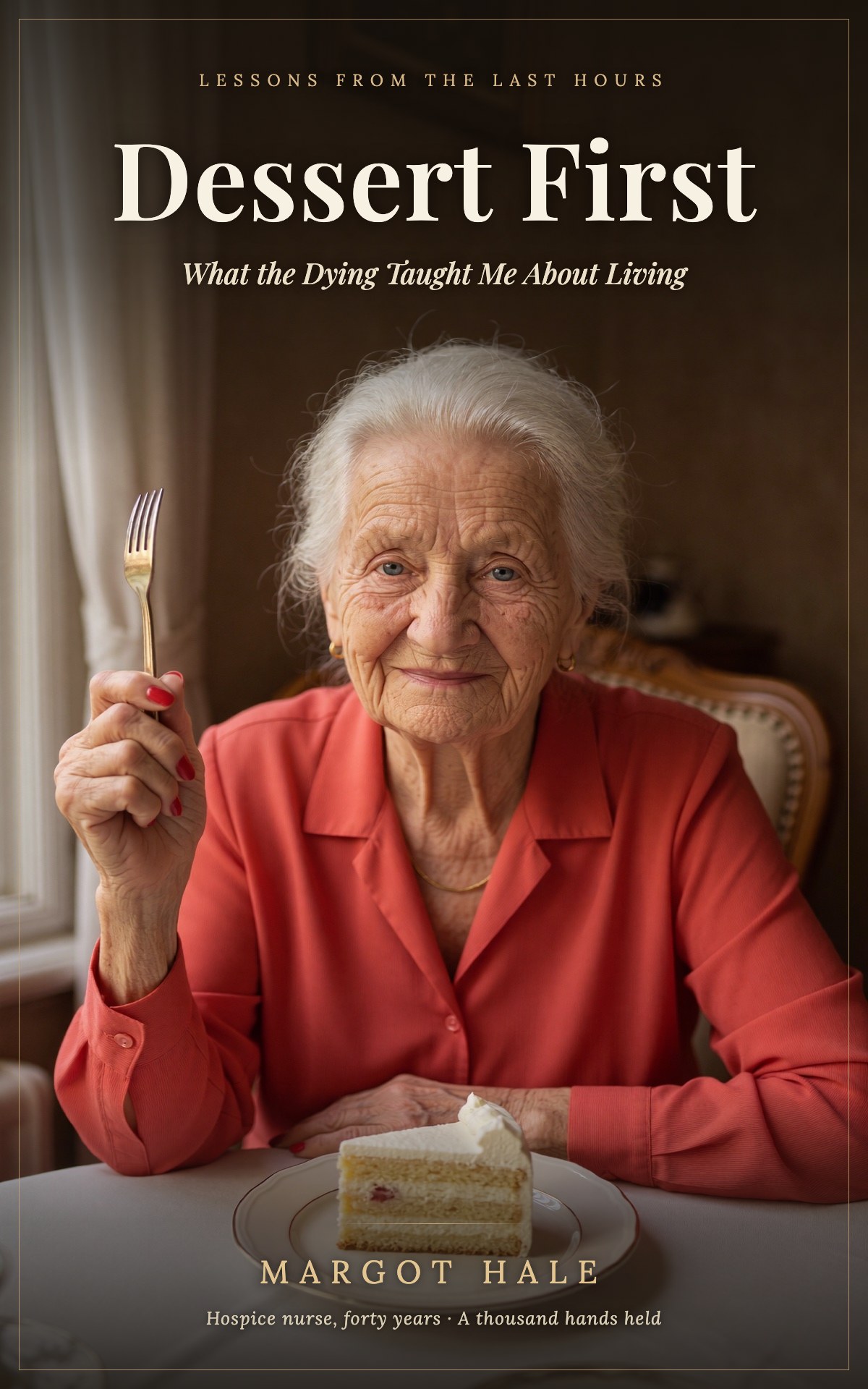
What the Dying Taught Me About Living
Instant PDF + EPUB · Read tonight · 30-day guarantee
In forty years on the ward, nobody told me a secret. No revelation, no white light. Everything my patients suddenly cared about at the end — the mornings, the phone call, the china in the cabinet — they already knew. So do you. This book is about the gap between knowing and doing. My patients paid for it with everything. You can still get it at the early price.— Margot
None of this makes you broken. It makes you early. My patients had exactly this list — they simply ran out of time to do anything about it. You have not. That is the entire difference, and it is everything.
Gently, and sooner than you think.
The good china waits in a locked cabinet.
→
Your Tuesday coffee has a gold rim.
“We really should call them.”
→
The five o’clock call is simply what you do.
The favorite dress is saving itself for an occasion.
→
You wear the good thing to buy milk.
“Life is short” lands like a threat at midnight.
→
It reads like permission at breakfast.
Someday, someday, someday.
→
This Thursday.
I was a palliative nurse for forty years. I sat with more than a thousand people in their last hours — long enough to notice that the dying don’t discover anything new. A psychiatrist named Irvin Yalom documented the same thing: at the end, people simply stop ignoring what they always knew.
Dessert First is that knowledge, moved up the calendar. Twenty-eight short chapters. Each one is a true story from the ward or from my own kitchen, one sentence worth keeping in your pocket, and one small practice — small enough to finish before the kettle boils.
It is not a book about death. It is a book about Tuesday, written by someone who has seen exactly what Tuesdays are worth.
From the foreword
“I am eighty-seven years old, and I have been meaning to write this book for roughly thirty of them. You see the problem already.”
Chapter 1 · The Good China
“She drank her tea looking out the window, in no hurry at all — like a queen at her own coronation, thirty years late and perfectly on time. Then she said the sentence I have carried ever since: ‘I kept waiting for a special occasion, Margot. Nobody told me I was it.’”
Chapter 10 · Red Nails
“The boy at the till asked me, quite sincerely: ‘What’s the occasion?’ I told him the truth. ‘I woke up.’ He laughed. I let him. He thought I had made a joke, and I had not made a joke in any particular.”
I am eighty-seven years old, and I have been meaning to write this book for roughly thirty of them. You see the problem already.
The woman who spent four decades listening to people regret their somedays had a someday of her own, and it sat in a drawer with the good stationery. I would like to tell you I finally wrote it because I became wise. The truth is that I turned eighty-seven, did the sums, and decided the drawer had had its turn.
So. Introductions.
My name is Margot Hale. For forty years I was a palliative nurse — hospice, we mostly say now — which means my job was to sit with people in their last weeks and hours and make those hours softer. I have held more than a thousand hands as they let go of the world. I say that plainly, dear, not to impress you. It is simply my qualification, and it is the only one I have.
People assume forty years of deathbeds makes a person morbid. I understand the assumption. It is exactly backwards. The ward did not teach me about dying — the dying, it turns out, manage that part with more calm than their visitors ever do. The ward taught me about living, because I heard, over and over, in a thousand variations, what the living wish they had done while the doing was cheap.
And here is the strangest part, the part this whole book stands on. In forty years, not one person told me a secret. Everything they suddenly cared about at the end — the mornings, the phone call, the china in the cabinet — they already knew. The dying learn nothing new. They just stop ignoring what they always knew.
You already know it too. That is why some of these chapters will feel less like news and more like a hand on your shoulder, turning you toward something in your own house.
— the foreword continues in the book · choose your edition
“I tried to use all my good stuff… it worked. It made every meal so special.”
@maggiekenwarford · under The Good China
“I’m also 87 and like to dress nice. I did all my life — I do it for me. I have a better day no matter what I do.”
@liocevita · under Red Nails
“I am also 89. I like to go to the thrift store and look around. Might find something I can’t live without for $1.99.”
@muzzy3959 · under The Unnecessary Thing
“So true! We should really learn to appreciate and respect ourselves and use all the ‘good things’ — the expensive perfume, the jewelry that’s been passed along.”
@nataliebeautypmu · under The Good China
Real comments, quoted from under Margot’s stories on Instagram.
Edition I
$27
Instant delivery · 30-day guarantee
Edition II
$38
Instant delivery · 30-day guarantee
Edition III
$46
Sold separately: $74 — together, $46
Instant delivery · 30-day guarantee
If it doesn’t move something in you, write to us within thirty days and you’ll have your money back. I will privately assume you never got past the foreword — but you’ll have the money.
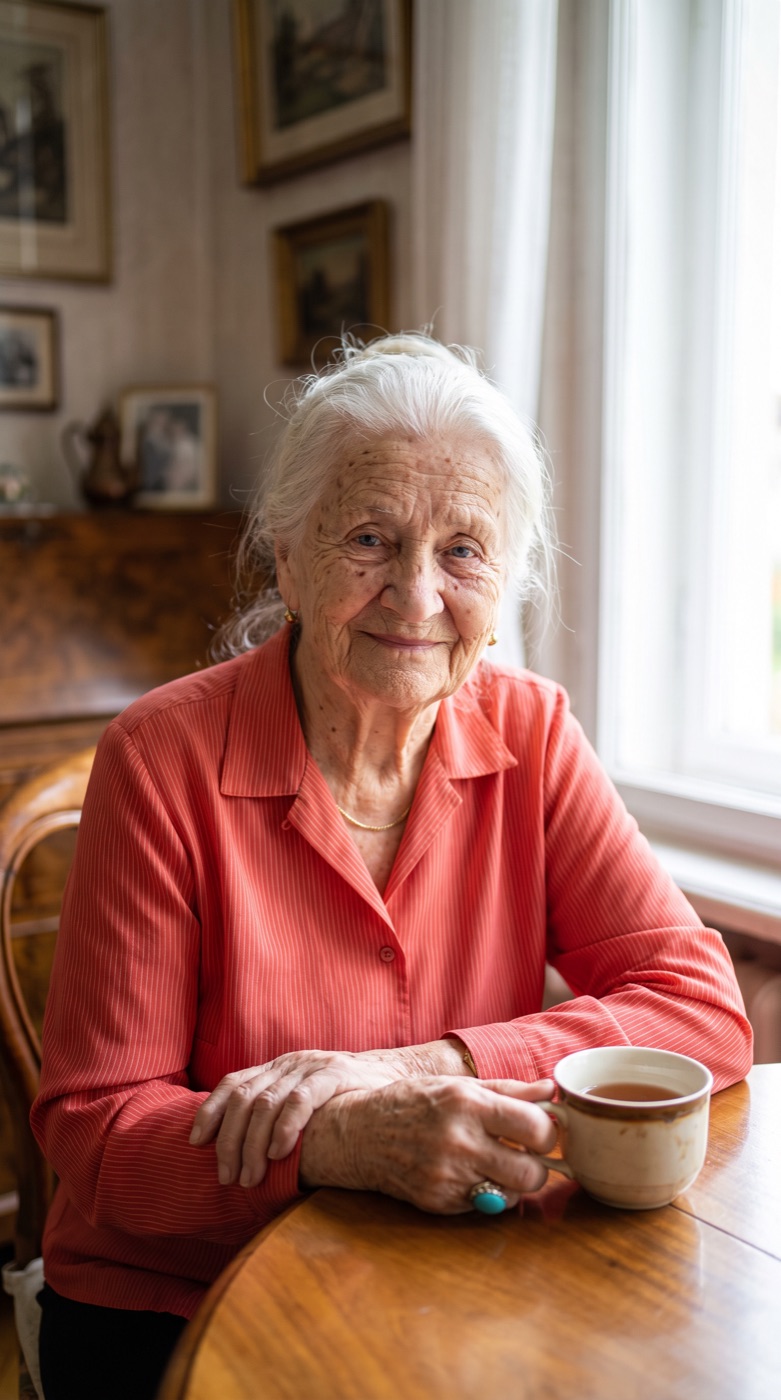
Margot Hale was born in Germany in 1939 and carried to America before she could walk. She spent forty years as a palliative nurse and held more than a thousand hands in their final hours. She has been retired for twenty years, during which she has used the good china daily, worn red nail polish to buy milk, and eaten dessert first.
This is her first book. She would like to note that she began it thirty years ago, and that you should not wait that long for anything.
No, dear. I was there. Standing close to the end is the least sad place I have ever worked — that privilege belongs to the hallway. This book was written to get you out of the hallway.
Digital files, instantly: PDF and EPUB (and in Edition III, audio files and the pocket guide). Nothing ships; nothing waits. Waiting is rather what we are against.
It is the only time it works. My patients understood everything perfectly. Their problem was the calendar.
Thirty days, full refund, no interrogation.